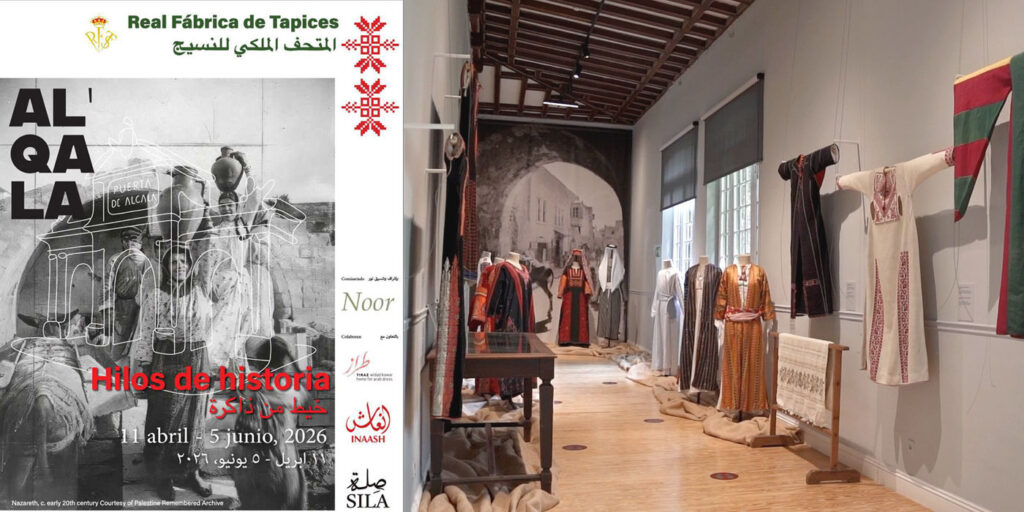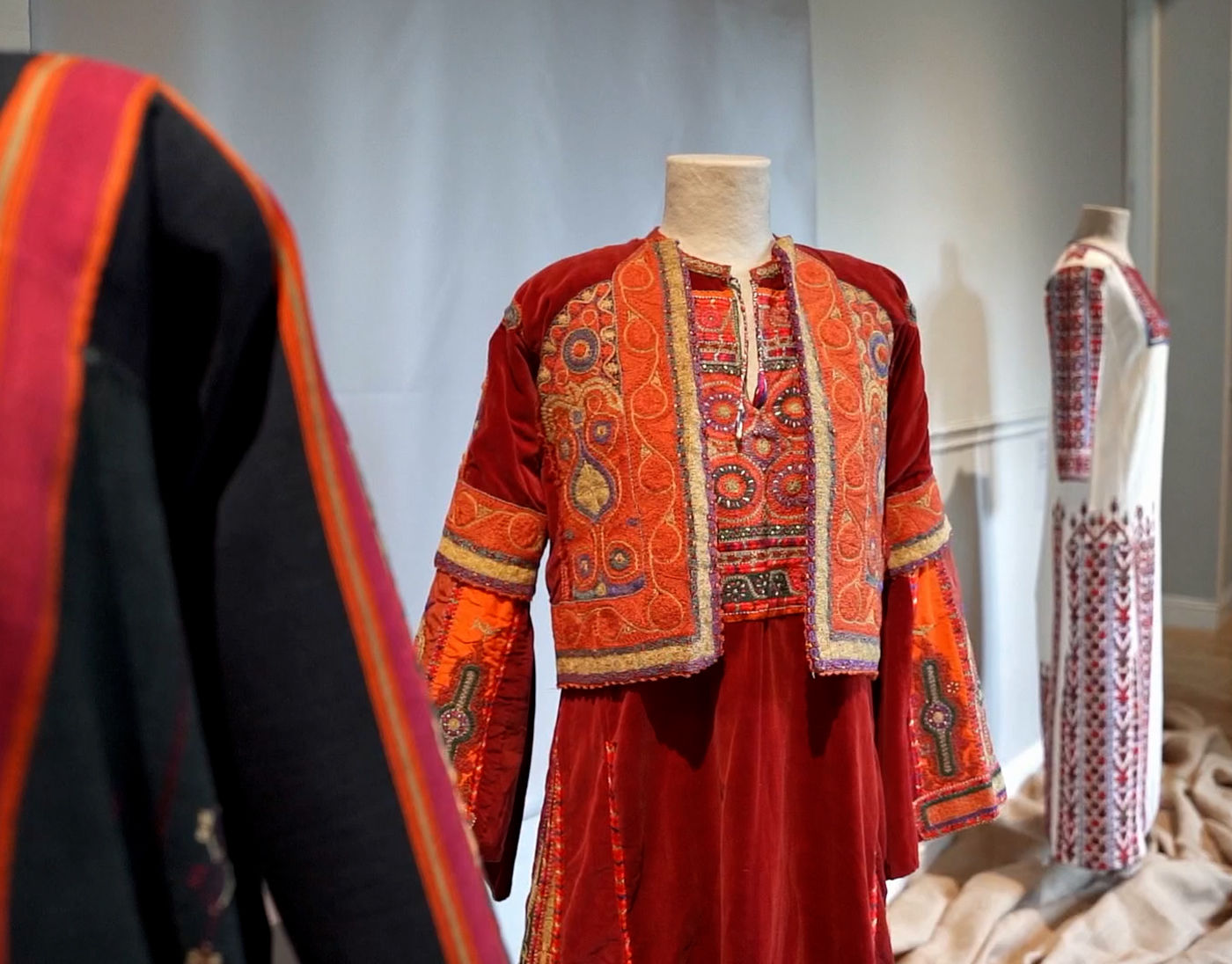
The Real Fábrica de Tapices (Royal Tapestry Factory) in Madrid has officially opened the doors to “Al’Qala: Threads of History,” a milestone exhibition dedicated to tatreez (traditional Palestinian embroidery). Featuring over sixty historical and contemporary pieces, the exhibition transforms each artwork into a narrative fragment—a powerful medium for transmission, memory, and creation.
Shapes that sustain Memory
In this exhibition, the embroidered works do far more than just showcase Palestinian culture. As Ali Jaafar, Director General of the Lebanese association Inaash, highlights:
“…among the installations, there are six hand-embroidered panels, each deeply rooted in the embroidery language of a different Palestinian city. Presented as tent-like structures, the works blur the line between culture and shelter, where embroidery becomes both an archive and a shield, preserving identity through displacement.”
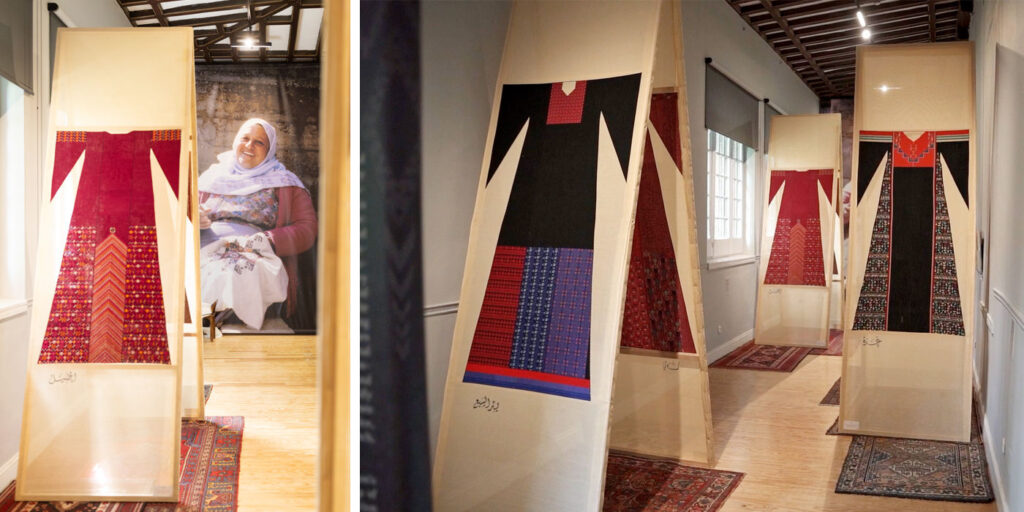
This perspective is crucial to understanding how embroidery transcends technique, evolving into an act of resistance and remembrance. It is precisely under this premise—of providing shelter while respecting the structure of the garment—that our Paperpaste mannequins find their true purpose. Their role is to organically support the silhouette of each piece, intergrating subtly into the overarching narrative of the exhibition.
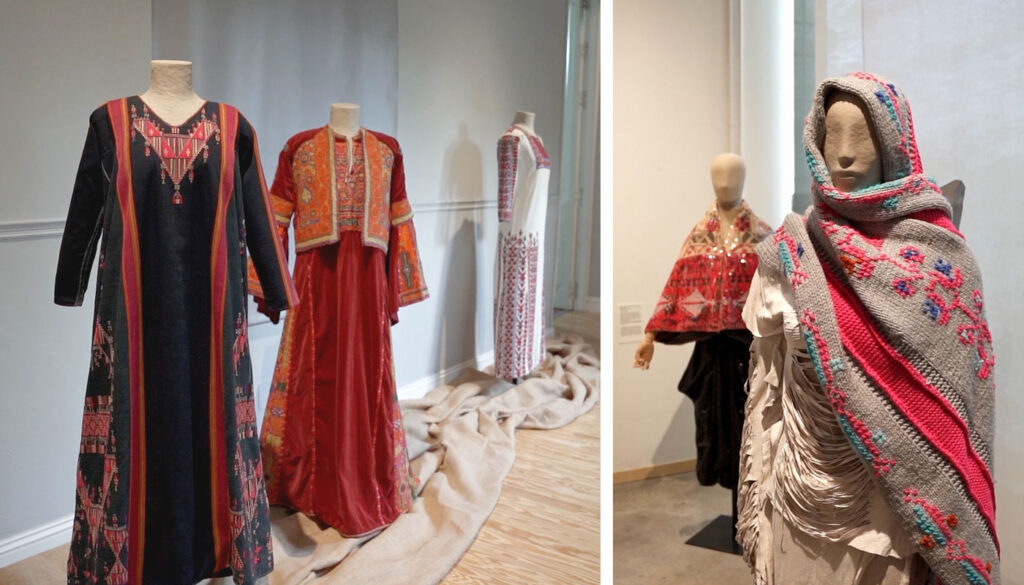
Throughout this process, our products—the Shasta and Logan classic busts, the Kid bust form, the Valira female mannequin(femmequin), and the Pyrenees torso—were meticulously arranged to match the unique shape and scale of every textile. In particular, their warm tones (the natural color of paperpaste), which evoke unbleached linen or raw paper, combined with a subtle texture to form an invisible foundation that lends a sculptural balance to the entire display.
A discreet contribution to the narrative
Our goal in this collaboration was never to take center stage, but rather to be part of a deeply respectful process: creating the ideal conditions for the true meaning of each artwork to shine through as purely as possible. We are incredibly proud to have provided this invisible support system, helping each piece tell its story with absolute clarity.
«Al’Qala» will be open to the public until June 5, 2026, at the Real Fábrica de Tapices. If you’re curious to learn more about the project, you can find further details at alqala.es or on their Instagram profile, @alqala_hilosdehistoria.