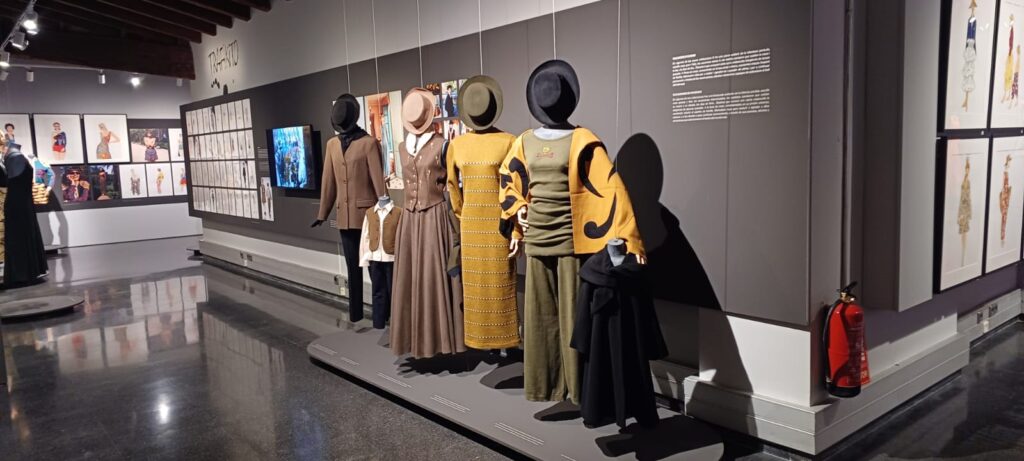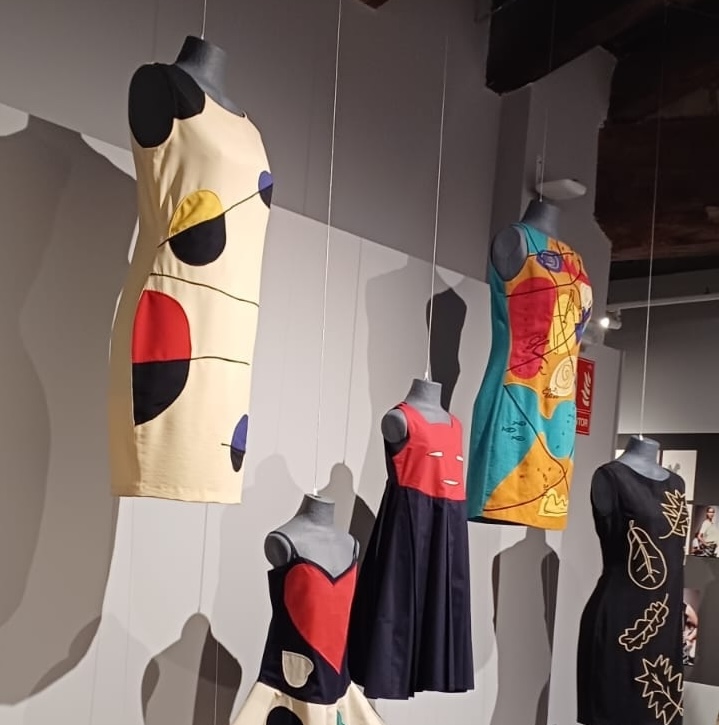
At Pasqual Arnella, we conceive design as a language—a silent yet powerful medium that conveys values, ideas, and ways of being in the world. That’s why, when our pieces form part of projects such as Tráfico de Modas 1980–1992. Arrebato, juego, familia, we feel that craftsmanship takes on a new meaning: it becomes a tool of memory, a gesture that engages in dialogue with history, creativity, and emotion.
This exhibition, which can be visited at the Centre Cultural La Nau in Valencia, is much more than a retrospective of a clothing brand. It is an intimate, emotional, and political journey through a time when fashion served as a vehicle for both personal and collective expression—a space where the aesthetic was inseparable from life itself.
An exhibition about bodies, friendships, and rebellion
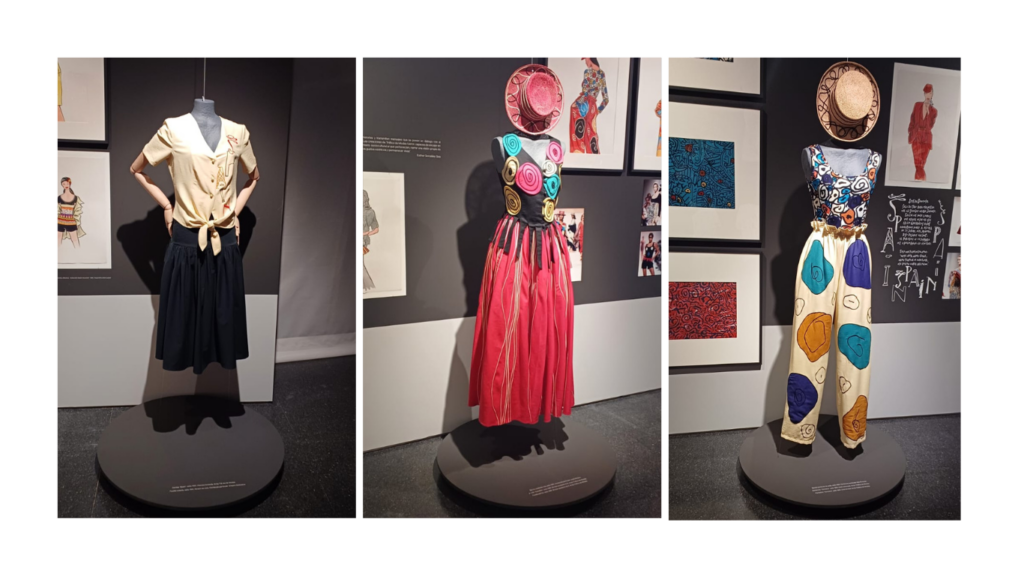
‘Tráfico de Modas’ was not just a Valencian fashion label active between 1980 and 1992. It was, above all, a creative community—a group bound by elective affinities that understood clothing as play, as a statement of intent, as a way of making space for difference.
During Spain’s democratic transition, a time when the country was experimenting with new freedoms and ways of being, ‘Tráfico de Modas’ put forward a radically original vision. Genderless clothing, theatrical patterns, recycled fabrics, self-managed workshops, collections that challenged the conventional market. All of it approached with a spirit that was festive, critical, and deeply artisanal.
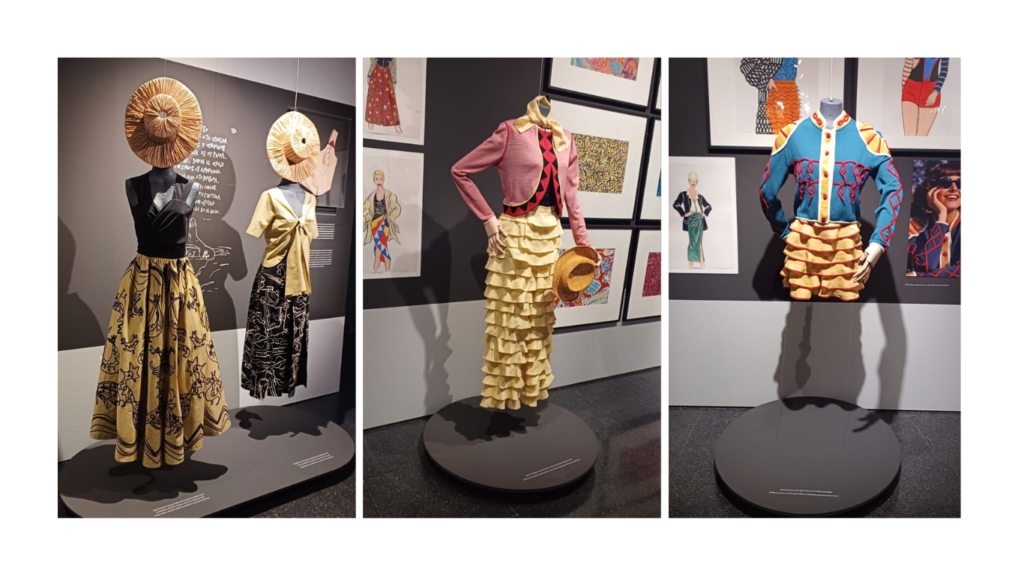
The exhibition captures this spirit from a cross-disciplinary perspective: fashion, art, graphic design, photography, personal archives… Objects are interwoven with memories, garments with voices. It is an exhibition that is both emotional and political, celebrating a way of making and creating through networks of complicity and freedom.
Our busts, key elements in this scenography
In such a meaningful context, our busts act as structures in the service of storytelling. They are not mere supports for clothing: they are silent presences that help to stage the narrative, to give literal form to the garments, to uphold the material memory of an era.
Various models from our collection were used in the exhibition, expressly adapted to integrate into the room’s circular layout. Each one has been handcrafted from recycled paper paste —a material that embodies our values: sustainability, respect for resources, and the beauty of simplicity.
Specifically, the exhibition features the Haltia model—a female bust with natural, elegant, stylised lines—and children’s busts, with classic and charming silhouettes. Both types have been finished in anthracite paint and include an integrated suspension system for aerial installation.
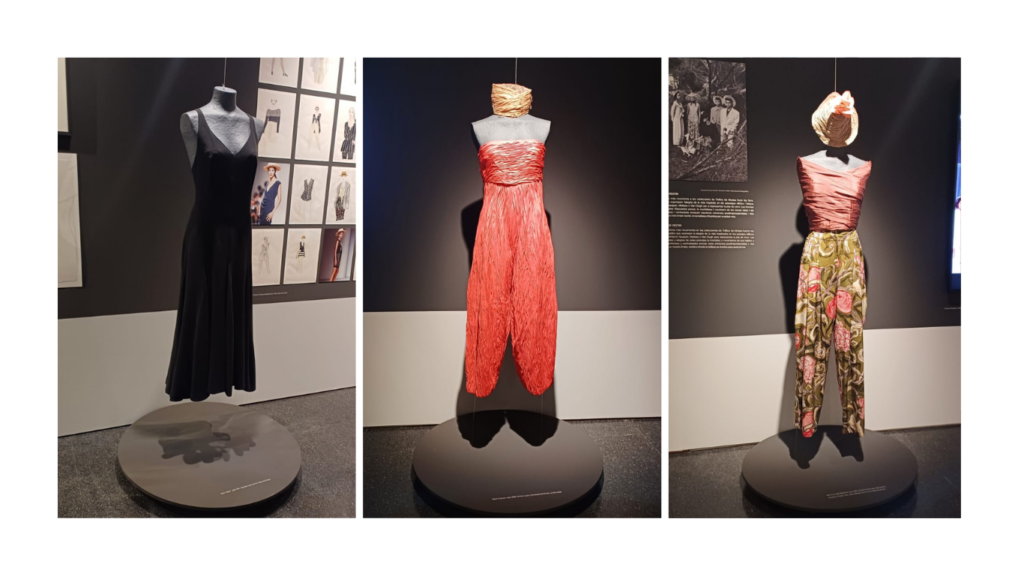
The busts were selected by the Art i Clar team, who were responsible for the exhibition design and installation. It has been a pleasure to collaborate with them. Their aesthetic sensitivity and respect for the curatorial narrative allowed us to adapt our pieces to a scenographic language that is coherent, evocative, and highly refined. We are truly grateful to Art i Clar for their trust. Taking part in this exhibition has been an opportunity for us to connect with the symbolic dimension of the handcrafted object.
A garment, a bust, an archive: each is a fragment of a story that deserves to be told with care.
At Pasqual Arnella, we believe in design with soul—design that listens to the past while looking towards the future. And when it encounters projects like ‘Tráfico de Modas’, it is reminded of its very purpose.